








In the fast-paced world of construction, time is money, and safety is non-negotiable. Among the various modular scaffolding systems available today, the Cuplock scaffolding system stands out as one of the most widely adopted and trusted solutions globally. Its unique cup-and-blade locking mechanism delivers exceptional speed, structural integrity, and versatility across a broad spectrum of projects—from high-rise building facades to heavy-duty industrial formwork support.
This article provides a professional, step-by-step breakdown of the Cuplock scaffold work method, covering everything from pre-installation planning to final safety inspections, while highlighting the manufacturing excellence that ADTO Group brings to this essential construction system.
Understanding the Cuplock System
Before examining the work method, it is essential to understand what makes Cuplock scaffolding distinctive. The system consists of vertical standards with fixed lower cups welded at regular intervals—typically every 500 millimeters—and movable upper cups that lock horizontal members into place. Each node point can accommodate up to four horizontal connections, enabling rapid assembly without the need for nuts, bolts, or wedges.
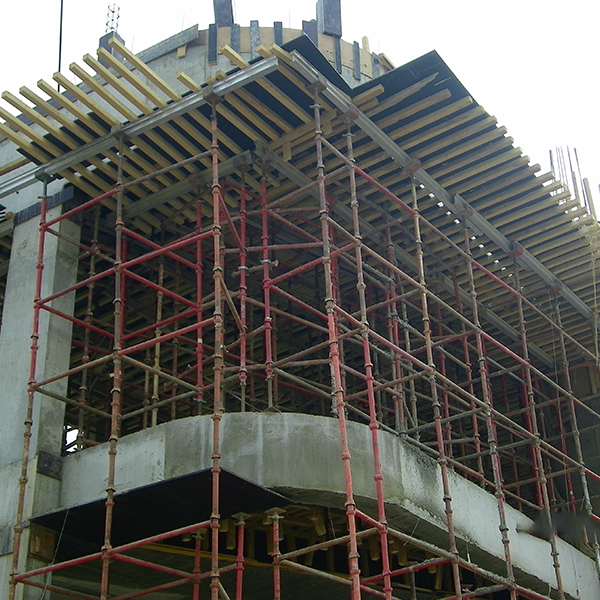
The core components include:
Standards (Verticals): The main load-bearing vertical posts equipped with cup joints at half-meter intervals
Ledgers (Horizontals): Horizontal tubes connecting between standards, distributing loads evenly
Transoms: Provide intermediate support for scaffold boards and working platforms
Base Jacks and Plates: Foundation components that allow leveling on uneven terrain
Diagonal Braces: Installed to improve lateral stability and prevent sway
Guardrails and Toe Boards: Essential safety components installed at working levels
The Cuplock Work Method: A Step-by-Step Professional Guide
Step 1: Pre-Installation Planning and Site Preparation
Thorough planning is the foundation of any successful scaffolding installation. Before a single component is placed, the project team must:
Assess Ground Conditions: Confirm that the ground can support the weight of the scaffold system. Use sole plates or base plates under each standard to distribute loads effectively. If the ground is not firm or level, engineering solutions such as timber mats or compaction may be required.
Clear the Work Area: Remove debris and obstacles, and establish a safe perimeter around the scaffold footprint. Check for overhead power lines, underground services, and necessary right-of-way clearances.
Gather Tools and Components: Essential tools include hammers, spirit levels, safety gloves, and all Cuplock components—standards, ledgers, transoms, braces, base jacks, and scaffold boards. All components should be inspected for damage before use.
Plan the Layout: Determine scaffold height, length, and configuration based on project specifications. A standard bay size is typically 2.5 meters by 1.2 meters.
Step 2: Laying the Foundation
The base of the scaffold must be perfectly level and stable. Start by placing base plates or sole plates at the marked positions for each standard. Insert adjustable base jacks into the plates and adjust them to ensure the scaffold will be perfectly vertical. Use a spirit level to verify levelness. On soil foundations, a concrete pad with strength not less than C15 and thickness not less than 150 millimeters should be provided.
Step 3: Erecting the Standards (Verticals)
Standards are the vertical tubes that form the backbone of the scaffold, equipped with fixed lower cups at 500-millimeter intervals. Insert the standards into the base jacks. Ensure each standard is plumb (vertically straight) using a spirit level. If the scaffold height requires multiple sections, connect standards vertically using standard splices. The verticality deviation of uprights within each frame should be less than 5 millimeters.
Step 4: Installing and Locking the Ledgers (Horizontals)
This is where the Cuplock system's distinctive mechanism comes into play. The movable top cup on each standard is slid upward to expose the fixed bottom cup. The ledger ends—fitted with forged blades—are slotted into the fixed lower cups. The movable upper cup is then pushed down over the ledger blade and rotated to lock securely. The locking action produces a distinctive "click," confirming a secure connection. A single hammer strike completes the locking point. Each node can accommodate up to four horizontal connections, making the process remarkably efficient.
Step 5: Adding Transoms and Scaffold Boards
Once the primary ledger grid is established, install transoms at required intervals to provide intermediate support for the working platform. Secure them using the same cup-and-blade mechanism. Lay scaffold boards across the transoms, ensuring they are evenly spaced and securely positioned. For enhanced safety, use board-retaining clamps to secure walkway or anti-skid planks.
Step 6: Installing Diagonal Braces and Bracing
To ensure lateral stability and prevent sway, install diagonal braces across alternating bays. Connect the braces to standards and ledgers using the Cuplock system. Diagonal braces help distribute loads evenly and are critical for maintaining structural integrity under dynamic conditions.
Step 7: Installing Guardrails and Safety Features
Safety components are integral to the Cuplock system. Standards include welded sockets for 1,000-millimeter-high guardrails and base slots for toe boards. Attach guardrails to these welded sockets. Slide toe boards into the slots with a gap of less than 10 millimeters to prevent tools or materials from falling. Built-in anchor loops support personal fall-arrest systems with a point load capacity of up to 6 kilonewtons.
Step 8: Final Inspection and Load Testing
Before the scaffold is put into service, a comprehensive inspection is mandatory. Apply 1.25 times the design load to sample bays to verify structural integrity. Inspect all welds, ledgers, and joints thoroughly. Verify that all connections are securely locked and properly aligned. Ensure the total weight of workers, tools, and materials does not exceed the scaffold's load capacity.
Key Advantages of the Cuplock Work Method
The Cuplock system offers several professional advantages that make it a preferred choice for contractors worldwide:
Speed of Assembly: The cup-node connection system allows multiple horizontal members to be secured simultaneously. Erection and dismantling rates are three to five times faster than conventional scaffolding. Tool-free assembly reduces erection time by up to 40 percent compared to tube-and-coupler systems.
High Load Capacity: Manufactured from high-grade steel, Cuplock components are designed for heavy-duty applications. Standards have a rated axial capacity of 20 kilonewtons, ledgers 10 kilonewtons, and braces 8 kilonewtons.
Versatility: The system adapts to straight, curved, and cantilevered structures. It is suitable for facades, shoring, staircases, circular scaffolds, and mobile towers. Applications range from building construction and bridge projects to tunnels and industrial facilities.
Durability: Hot-dip galvanized finish protects against corrosion and supports over 500 reuse cycles without structural compromise.
Safety: Secure locking mechanisms, integrated guardrail points, and fall-arrest compatibility ensure compliance with OSHA and BS EN standards.
ADTO Group: Manufacturing Excellence in Cuplock Scaffolding
For procurement professionals and contractors seeking a reliable supplier of Cuplock scaffolding systems, ADTO Group represents a trusted partner with substantial manufacturing capability and international certification.
Founded in 1998, ADTO has established itself as a comprehensive manufacturer of scaffolding and construction materials. The company's Cuplock systems are manufactured using high-grade Q235 and Q345 ERW steel, delivering exceptional strength and durability. The hot-dip galvanized surface treatment enhances corrosion resistance, providing a service life exceeding 15 years.
ADTO's manufacturing strength is underpinned by nearly 300 sets of advanced processing equipment, with an annual production capacity of 150,000 tons of scaffolding products. The company's products are certified to meet rigorous international standards, including ISO 9001, CE, EN 12811-1, AS/NZS 1576, and BS 1139.
ADTO's Cuplock scaffolding has been deployed in projects across more than 100 countries, serving major state-owned enterprises including PetroChina and Sinopec. The company's commitment to quality, combined with its integrated supply chain and proven export capability, makes it a preferred choice for large-scale construction and industrial projects worldwide.
Conclusion
The Cuplock scaffold work method represents a paradigm of efficiency, safety, and versatility in modern construction. From meticulous site preparation to the distinctive "click" of a locked cup joint, each step in the assembly process is designed to maximize productivity while ensuring uncompromising structural integrity. For contractors and procurement professionals, partnering with a manufacturer like ADTO Group—with its certified quality, substantial production capacity, and global track record—ensures that the scaffolding supporting your project is built to the highest standards.

