








BS1139 steel tubes are widely used in construction projects where reliable scaffolding, consistent dimensions, and dependable load performance are essential. As an important component of temporary access and working structures, the quality of a scaffolding tubedepends not only on the raw material but also on the production process used in the factory. Understanding how BS1139 tubes are manufactured can help contractors, engineers, and purchasing teams make better decisions when selecting a reliable supplier.
From steel coil preparation to cutting, welding, galvanizing, inspection, and packaging, a professional factory normally follows a controlled production process. Each stage influences the final quality, durability, and usability of the scaffolding steel pipe.
1. Selection and Preparation of Raw Materials
The production process begins with the selection of suitable steel coils or strips. For scaffolding applications, manufacturers need steel with appropriate mechanical properties, chemical composition, and dimensional consistency.
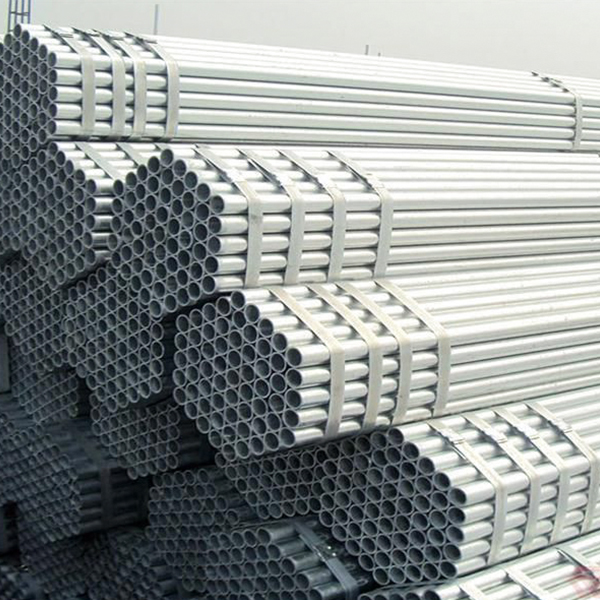
Before production, the steel material is inspected according to the factory's quality-control procedures. Parameters such as thickness, width, surface condition, and mechanical properties are checked.
High-quality raw materials provide a stable foundation for producing a reliable scaffold pipe. If the steel has inconsistent thickness or surface defects, these problems can affect subsequent forming and welding operations.
2. Steel Coil Uncoiling and Leveling
After inspection, the steel coil is placed on an uncoiling machine. The coil is gradually opened and fed into the production line.
Because steel coils naturally have a curved shape, leveling equipment is used to flatten the strip. This process helps maintain consistent dimensions during the following forming stages.
Accurate leveling is particularly important because dimensional consistency affects how scaffolding tubes fit with couplers, clamps, base components, and other scaffolding accessories.
3. Roll Forming
The flattened steel strip then enters a series of forming rollers. These rollers gradually transform the flat strip into a circular tube shape.
Unlike simply bending the steel in one step, roll forming uses multiple stages to gradually achieve the required diameter. This controlled process helps reduce excessive deformation and maintains a consistent tube profile.
For a scaffolding tube, accurate outside diameter and wall thickness are important because they influence connection performance and overall structural reliability.
4. High-Frequency Welding
Once the steel strip has been formed into a tubular shape, the longitudinal edges are joined through high-frequency welding.
High-frequency welding uses electrical energy to heat the edges of the steel rapidly. Pressure is then applied to create a continuous welded seam.
Professional factories carefully control welding parameters such as speed, temperature, pressure, and alignment. Proper welding is essential because the longitudinal seam becomes an integral part of the finished scaffolding steel pipe.
After welding, excess material around the weld area may be removed to produce a smoother surface.
5. Sizing and Straightening
After welding, the tube passes through sizing rollers. This stage helps achieve the specified outside diameter and improve dimensional accuracy.
The tubes may then go through straightening equipment to correct minor deformation caused during forming and welding.
A straight and dimensionally consistent scaffold pipe is easier to transport, assemble, and connect on construction sites. Good dimensional control also contributes to more efficient scaffolding installation.
6. Cutting to Required Lengths
Once the tube has passed the forming and sizing stages, it is cut into predetermined lengths.
Different construction projects may require different tube lengths, so factories can produce standard sizes or customized lengths depending on customer requirements.
Automatic cutting equipment can provide consistent dimensions while improving production efficiency and reducing material waste.
7. Surface Treatment and Galvanizing
For construction applications, corrosion protection is an important consideration. Many BS1139 tubes are supplied with galvanized surfaces, particularly when they are expected to be used outdoors or in humid environments.
Hot-dip galvanizing is one common method of protecting steel. During this process, prepared steel tubes are immersed in molten zinc. The zinc coating provides a protective barrier against moisture and atmospheric corrosion.
The thickness and uniformity of the coating are important quality factors. A properly galvanized scaffolding tube can provide improved resistance to corrosion and help extend service life compared with untreated steel.
8. Quality Inspection
Quality inspection is performed throughout the production process and before shipment. Depending on factory procedures and customer requirements, inspection may cover dimensions, wall thickness, straightness, surface condition, weld quality, mechanical properties, and galvanized coating.
For international buyers, purchasing from a factory with systematic quality-control procedures can reduce the risk of inconsistent products and improve project reliability.
9. Packaging and Shipment
After inspection, finished tubes are bundled according to length, quantity, and customer requirements. Proper bundling makes handling easier and helps protect the tubes during storage and transportation.
Export-oriented factories may also use suitable packaging and loading methods to maximize container utilization and reduce the possibility of damage during long-distance transportation.
Why Choose ADTO for BS1139 Scaffolding Tubes?
When purchasing BS1139 products, buyers should consider more than the quoted price. Manufacturing experience, raw-material control, welding technology, surface treatment, inspection procedures, packaging, and delivery capability can all influence the overall value of the product.
ADTO is a professional scaffolding manufacturer and supplier offering a range of construction products, including scaffolding tube, scaffolding steel pipe, and scaffold pipe. With manufacturing experience and established production processes, ADTO can provide products designed to meet the practical requirements of construction and scaffolding projects.
For international buyers, working with an experienced manufacturer can also simplify communication, product customization, quality control, and logistics. ADTO's broader scaffolding product range allows buyers to source related components from one supplier, helping improve procurement efficiency.
Conclusion
The production of BS1139 tubes involves several important stages, including raw-material selection, uncoiling, leveling, roll forming, high-frequency welding, sizing, cutting, galvanizing, inspection, and packaging. Each step contributes to the final performance and consistency of the finished product.
For contractors, distributors, and procurement professionals, understanding the manufacturing process makes it easier to evaluate different suppliers and identify products that offer reliable quality and long-term value. By choosing an experienced manufacturer such as ADTO, buyers can obtain professionally produced scaffolding tube and related products while benefiting from established manufacturing and quality-control capabilities.

