








Scaffolding is an essential part of construction, providing temporary access and working platforms for workers, tools, and building materials. The quality of scaffold materials directly affects the stability, durability, and safety of scaffolding systems. Whether a project involves residential buildings, commercial developments, bridges, or industrial facilities, selecting materials that meet appropriate standards is a key responsibility for contractors, engineers, and purchasing managers.
Understanding the basic standards of scaffold materials can help buyers evaluate suppliers, compare product quality, and make better purchasing decisions. From steel strength and dimensional accuracy to corrosion protection and component compatibility, several factors should be considered when choosing a reliable scaffolding manufacturer such as ADTO.
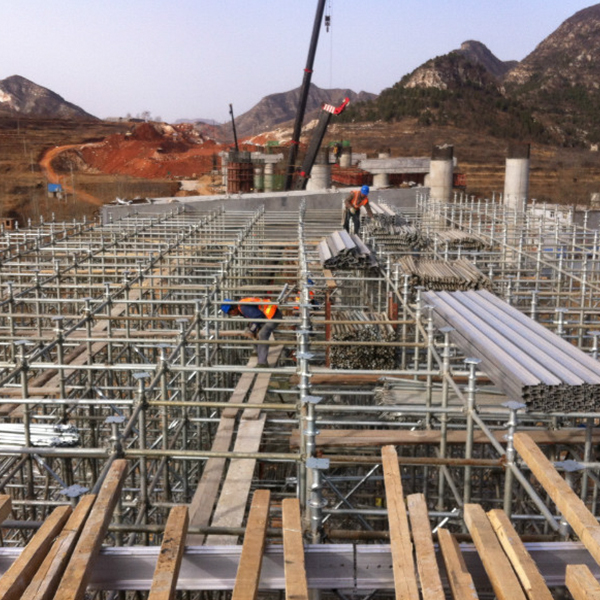
1. Compliance with Relevant Scaffolding Standards
One of the first considerations when purchasing scaffold materials is compliance with applicable standards. Different countries and regions may follow different requirements for scaffolding design, materials, manufacturing, inspection, and use.
For example, EN 12811 addresses performance requirements and general design considerations for temporary works equipment, including working scaffolds. EN 39 covers steel tubes used in tube-and-coupler scaffolding. In the United Kingdom, BS 1139 is associated with scaffolding equipment and related specifications. Other markets may apply their own national standards and regulations.
Buyers should confirm which standards apply to their projects and verify that the supplier's products meet the relevant requirements. Product documentation, inspection reports, and material certificates can help support this assessment.
2. Steel Material Quality and Mechanical Properties
Steel is widely used in scaffolding tubes, standards, ledgers, braces, frames, and other load-bearing components. Its mechanical properties influence how these components perform under working conditions.
Important properties include yield strength, tensile strength, ductility, and toughness. The appropriate requirements depend on the component design and applicable product standard.
Consistent raw materials also help manufacturers maintain uniform production quality. Buyers should request information about the steel grade and relevant material certificates instead of assuming that all scaffolding products made from steel have the same performance.
Reliable material selection provides a foundation for producing durable and dependable scaffold components.
3. Dimensional Accuracy and Wall Thickness
Dimensional accuracy is another basic requirement for scaffold materials. Scaffolding tubes and fittings must be manufactured to appropriate dimensions to ensure correct assembly and reliable connections.
For steel tubes, buyers should consider outside diameter, wall thickness, length, straightness, and dimensional tolerances. For modular scaffolding, the dimensions of standards, ledgers, braces, and connection components must be compatible.
Inconsistent dimensions can make assembly more difficult and may affect connection performance. Excessive deviations may also create problems during inspection or when combining components from different systems.
Professional manufacturers use suitable measuring equipment and quality-control procedures to check dimensions throughout production.
4. Welding Quality and Connection Reliability
Welding is commonly used to manufacture scaffolding frames, ladder beams, steel planks, and other fabricated components. Poor welding quality can compromise the integrity of a component, making weld inspection an important part of manufacturing quality control.
Manufacturers should apply appropriate welding procedures and inspect welds according to the applicable requirements. Depending on the product and risk level, inspection may include visual examination and other suitable testing methods.
Connection reliability is equally important. Couplers, locking devices, rosettes, cups, and other connection mechanisms should be compatible with the intended system and manufactured to the required specifications.
Workers must also install and secure connections correctly according to the manufacturer's instructions.
5. Corrosion Protection and Surface Treatment
Scaffolding is frequently exposed to rain, humidity, dust, and outdoor environmental conditions. Corrosion can gradually reduce the service life of steel components and increase maintenance requirements.
Galvanizing is a common method of protecting scaffold materials from corrosion. Hot-dip galvanizing applies a zinc coating that acts as a barrier against the environment and can provide sacrificial protection where the coating is locally damaged.
The required coating quality depends on the product specification, intended service conditions, and applicable standards. Buyers should check coating coverage, thickness where specified, adhesion requirements, and surface condition.
Painted or other coated components may also be suitable for particular applications when the specified protection system meets the project requirements.
6. Load Capacity and Structural Performance
Scaffold materials must be suitable for the loads and structural conditions expected during use. However, load capacity cannot be determined by looking at the steel grade or tube dimensions alone.
It also depends on component geometry, unsupported length, connection details, bracing, support conditions, scaffold height, and the overall structural arrangement.
For this reason, contractors should request relevant technical data and ensure that the complete scaffold configuration is designed and erected according to applicable requirements. Components should not be loaded beyond their documented limits, and modifications should not be made without appropriate technical approval.
7. Inspection, Testing, and Traceability
A reliable quality-management process should include checks on incoming materials, manufacturing operations, finished products, and shipment preparation.
Depending on the component and applicable requirements, testing and inspection may cover mechanical properties, dimensions, weld quality, coating condition, and other product-specific characteristics.
Material certificates, inspection records, and traceability information can help buyers verify product consistency and manage quality risks. Products should also be inspected before use, with damaged, deformed, heavily corroded, or otherwise defective components removed from service.
Why Choose ADTO Scaffold Materials?
For contractors, distributors, and construction companies, choosing a dependable supplier is an important part of scaffold procurement. ADTO offers a range of scaffolding and construction products for different project applications.
When evaluating ADTO scaffold materials, buyers should review the applicable product specifications, steel grades, dimensional requirements, corrosion-protection methods, inspection documentation, and compliance evidence relevant to their destination market.
An experienced supplier with a broad product range can also help simplify procurement by coordinating scaffolding tubes, modular system components, steel planks, couplers, and related accessories. Buyers should confirm product compatibility and technical requirements before ordering.
Conclusion
The basic standards of scaffold materials cover several essential areas: compliance with relevant regulations, steel quality, dimensional accuracy, welding and connection reliability, corrosion protection, structural performance, and quality inspection.
For purchasing managers and construction professionals, evaluating these factors helps reduce procurement risks and supports safer, more efficient construction operations. By checking technical documentation and selecting suitable products from a reliable supplier such as ADTO, buyers can make better-informed decisions for their scaffolding projects.

